Steven Barnett advises Commons committee on BBC Charter Review
Professor Steven Barnett served as specialist adviser to the House of Commons Digital, Culture, Media and Sport Committee for its inquiry into the BBC Royal Charter Review. The Committee published its report, “BBC Royal Charter Review”, on 1 October 2026, and acknowledges Steven and the University of Westminster for their contribution.
The Committee launched the inquiry in March 2026 to examine how the BBC is funded and governed, its purpose and scope, and its independence, as well as the impact on the corporation of rapid changes in how television and digital media are distributed and consumed. Over the following months the Committee published 98 written submissions and held eight oral evidence sessions, hearing from current and former broadcasting executives, journalists and podcasters, think-tanks, academics, trade unions, the independent production sector, writers and directors, other broadcasters, the Chair and Director-General of the BBC, and the Secretary of State for Culture, Media and Sport. Two other Westminster colleagues also gave oral evidence. Professor Maria Michalis appeared before the Committee in June to discuss funding models, and her evidence is cited in the report, while researcher Helen Jay gave evidence later the same month.
The report comes at an important moment. The current Charter expires at the end of 2027, and the government is due to publish its White Paper on the future of the BBC by the end of this year. The Committee concludes that the licence fee in its current form is outdated, and recommends that it be reformed so that it is no longer linked to a television set or any particular device, with a lower cost to individual households. It urges the government to keep an open mind on a household levy as a longer-term model. On governance, the Committee recommends that the next Charter be permanent, with regular reviews of the BBC’s funding and public purposes built into the Charter, and that political appointments to the BBC Board come to an end.
The report also recommends that the government take back full funding of the BBC World Service, and that the BBC be given new public purposes on countering misinformation and disinformation and on innovation and technology. Looking at how audiences find content, it calls for legislation to give trustworthy news greater prominence on social media and for a dedicated public service media button on smart TV remote controls. It supports opening up iPlayer to content from other public service broadcasters and the expansion of the BBC’s activity on YouTube.
Steven also spoke last week on a Social Market Foundation panel at the Labour Party Conference, discussing the future of the BBC, its contribution to the creative industry economy, and its vital role in training and nurturing talent throughout the digital industries.
Steven is Professor of Communications at the University of Westminster, where he specialises in media policy and regulation, political communication, and the theory and practice of journalism. He has previously served five times as specialist adviser to the House of Lords Communications Committee, most recently for its 2019 inquiry into public service broadcasting, and in 2024 was appointed to the DCMS panel examining the future of television distribution.
External link: https://committees.parliament.uk/publications/55121/standard/pdf
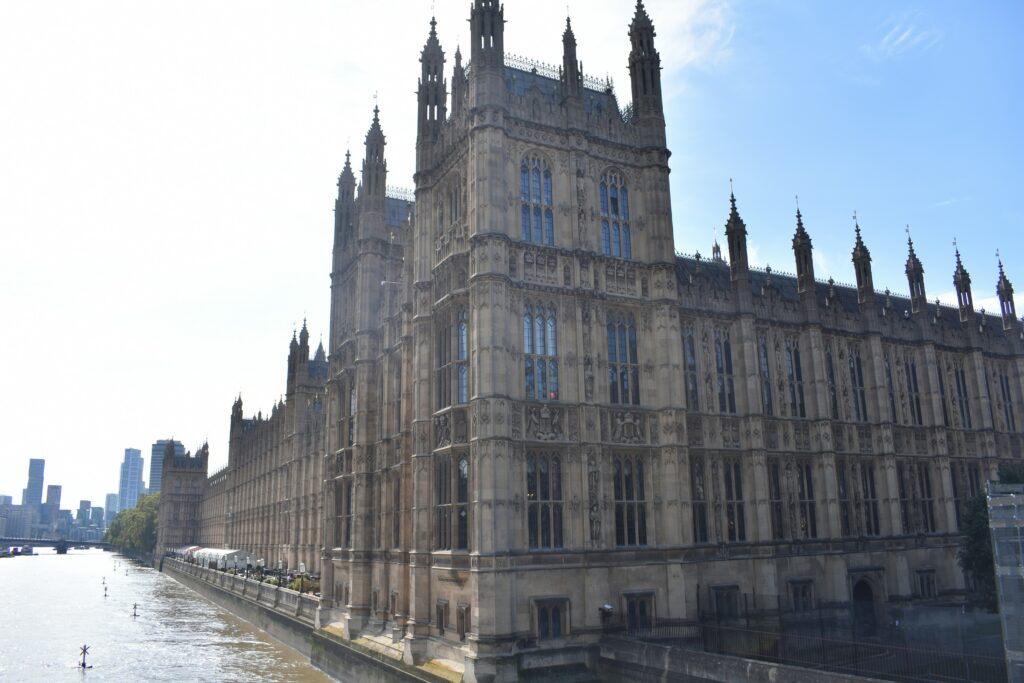
Photo by Martina Jorden on Unsplash