Digital Fortresses project co-led by Miriyam Aouragh publishes new report
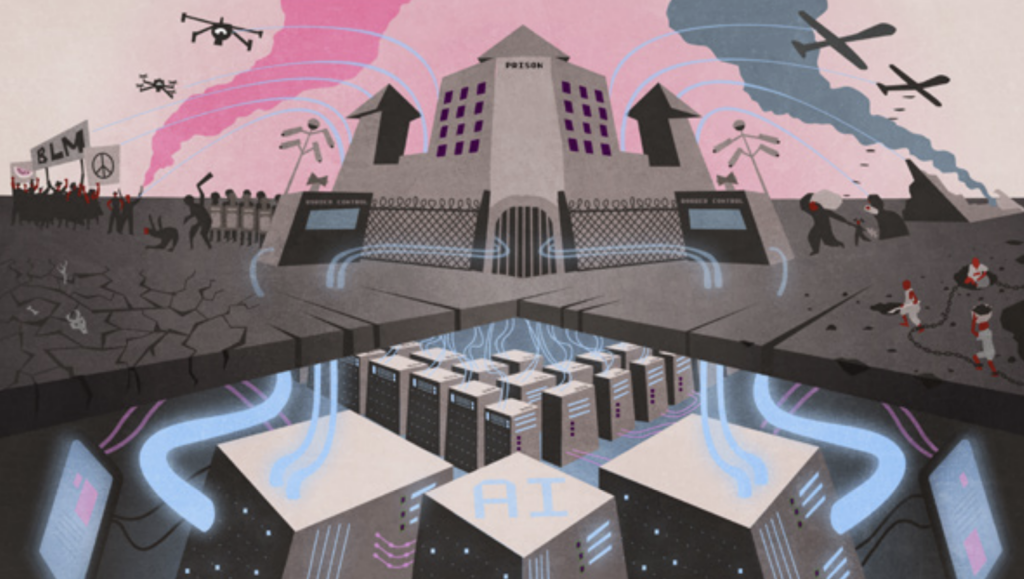
Professor Miriyam Aouragh is co-leading “Digital Fortresses”, a collaboration between The Institute for Technology in the Public Interest (TITIPI) and the Transnational Institute (TNI), alongside TNI’s Nick Buxton. The project has published “Digital Fortresses: Mapping the infrastructure of coercion and control”, a freely accessible report bringing together discussions and analysis of the digital systems connecting border enforcement, policing and militarisation.
The report draws on a two-day workshop held in Amsterdam in March 2026, which brought together 30 activists, researchers and organisers working across technology, borders, militarisation and social justice, with support from the Funders Initiative for Civil Society. It examines how systems often treated as separate are connected through shared databases, physical infrastructure and corporate interests. Rather than focusing only on individual technologies or regulations, the report considers how mapping these relationships can help identify opportunities for intervention and collaboration.
Among the examples discussed is Germany’s asylum seeker payment card, the Bezahlkarte. The report examines restrictions on access to cash and purchasing choices, alongside solidarity initiatives enabling cardholders to exchange supermarket vouchers for cash. Its wider discussion considers strategies including labour organising, legal challenges, corporate accountability and the development of alternatives shaped by affected communities.
Sharing the publication with colleagues, Aouragh explained that the project is approaching its conclusion, with a series of long-reads planned for January. These will include a study of the project’s “operations room” methodology, through which participants explored the realities of refugee welfare payment cards and forms of resistance to their use. The forthcoming work will extend the discussions brought together in the workshop report.
Read the full report: “Digital Fortresses: Mapping the infrastructure of coercion and control”
Image: TNI, with kind permission